How to Safely Clean Frameless Glass Partitions in London Offices Without Streaks or Scratching

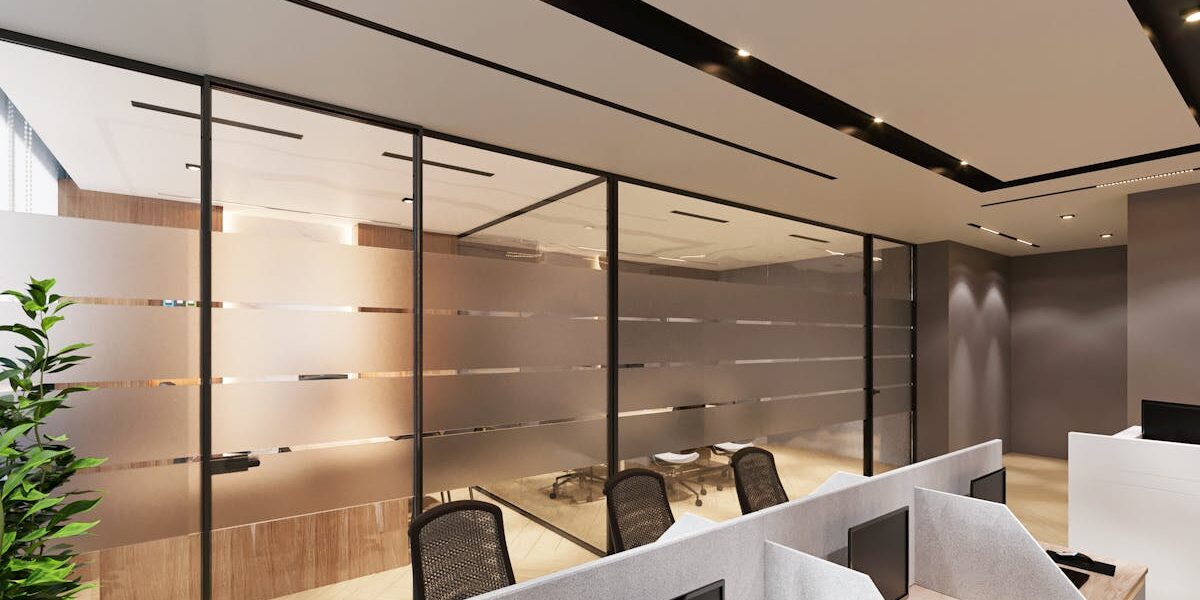
Frameless glass partitions have become one of the defining architectural features of the contemporary London office. Walk into almost any refurbished commercial floor in the City, Canary Wharf, Shoreditch, or the West End and you will find them – floor-to-ceiling panels of structural glazing dividing meeting rooms, executive suites, and collaborative zones with a transparency that feels both open and refined. They look exceptional when maintained correctly. They look worse than no partition at all when they are not. The risk is not in cleaning them – it is in cleaning them with the wrong products, the wrong tools, or the wrong technique applied to a surface that is considerably more demanding than it appears. Streaks are an aesthetic failure. Scratches are a damage liability. Both are almost entirely preventable, and this article explains precisely how.
Why Frameless Glass Partitions Demand a Different Approach
The Surface Isn’t Just Glass
The first and most consequential assumption a contractor can make about a frameless glass partition is that it is plain glass. Many are not. Toughened – or tempered – glass is standard in most commercial partition systems for structural and safety reasons, and its surface behaves differently under abrasion to standard float glass. Beyond that, a significant proportion of partitions in London offices carry factory-applied coatings: anti-fingerprint treatments that reduce surface adhesion, anti-reflective coatings that improve visual clarity in artificially lit environments, and low-iron glass formulations that alter surface chemistry in ways that affect how cleaning products interact with the panel.
Before selecting any product or tool, a contractor needs to establish what they are actually working with. This means checking with the facilities manager or the partition supplier, reviewing any available product documentation, and – where coatings are present – identifying whether those coatings carry any manufacturer guidance on compatible cleaning chemistry. Assuming it is “just glass” is where the majority of partition cleaning errors begin, and it is an assumption that is straightforwardly avoidable.
The Frameless Factor – Why the Edges and Fixings Matter
The absence of a frame changes the cleaning geometry in ways that are easy to underestimate. Frameless partitions are held in place by patch fittings, floor and ceiling channel sections, or structural silicone bonding – and each of these fixing methods creates junctions and edges that require specific attention. Silicone joints are porous and will absorb cleaning chemistry over time if the wrong products are used repeatedly. Patch fittings in brushed steel or chrome are vulnerable to streaking and chemical discolouration if glass cleaners are allowed to pool around them rather than being wiped clear. The edge of the glass panel itself – exposed and unprotected by any frame – can accumulate residue that wicks back onto the face of the glass during the next clean if it is not addressed directly.
Cleaning a frameless partition correctly means cleaning the whole system – face, edges, fixings, and silicone lines – not just the visible expanse of glass.
The Enemies of a Clean Finish – Streaks, Smears, and Scratches Explained
Why Streaks Happen (and Why They’re So Hard to Shift)
Streaks on glass partitions are rarely the result of a single mistake. They are almost always the product of a chain of small errors that compound one another. A cleaning solution applied at too high a concentration leaves surfactant residue that dries into a film. A microfibre cloth that has been laundered with fabric softener loses its absorption capacity and smears rather than lifts. A squeegee blade with a nick or a hardened edge leaves a consistent line of residue with every stroke. A surface cleaned in direct sunlight or close to a heat source dries before the operative can complete the finishing pass, baking mineral deposits into the glass.
London’s water hardness is a particularly significant factor here. The capital sits consistently among the highest hard-water areas in the UK, with calcium carbonate concentrations typically ranging between 250 and 400 mg per litre depending on the borough and the season. Tap water used directly in a cleaning solution – or left on a glass surface as residual rinse water – will deposit a fine mineral film that catches light and creates the impression of a surface that cannot be cleaned properly, regardless of how much effort goes into it. Understanding this is not a technical detail; it is a practical prerequisite for producing a clean finish on London glass.
How Scratches Occur on Partition Glass
Scratching on partition glass almost always traces back to one of three causes. The first is abrasive tooling – scourers, rough cloths, or steel wool used to address a stubborn mark or adhesive residue without considering the consequence to the surface. The second is particulate contamination: a cloth, squeegee rubber, or applicator pad that has picked up grit, debris, or dried cleaning product from another surface and is then drawn across the glass. The third – and most frequently overlooked – is improper removal of manifestation film, which is addressed in detail later in this article.
Pre-cleaning inspection addresses all three. Before work begins on any partition, the operative should check the glass face for loose debris, inspect cloths and squeegee rubbers for contamination or wear, and confirm that no abrasive tools are present in the kit. This takes less than a minute and eliminates the most common causes of irreversible surface damage.
The Right Products for London’s Hard Water Environment
What to Use – and Why Dilution Matters
Given London’s water chemistry, the product selection for partition glass is not simply a matter of choosing a reputable brand. It is a matter of choosing chemistry that performs under hard-water conditions and finishing with water that will not leave mineral deposits behind. Alcohol-based glass cleaners evaporate cleanly and leave minimal residue, making them well-suited to London conditions. Low-residue neutral detergents diluted in demineralised or distilled water offer an effective and economical alternative for larger panel areas. Demineralised water used as a final rinse – or as the base for the cleaning solution itself – eliminates the mineral deposit problem at source.
Dilution discipline matters more than many operatives appreciate. Using a glass cleaner at double the recommended concentration does not produce a cleaner result – it produces a higher residue load on the surface, which is more likely to streak as it dries, and more likely to cause progressive degradation to any factory-applied coating with repeated use. The label concentration exists for a reason, and departing from it is one of the most routine causes of dissatisfied clients on partition contracts.
What to Avoid
Bleach-based products have no place on glass partition systems. They will degrade silicone joints, discolour patch fitting finishes, and strip or damage anti-fingerprint and anti-reflective coatings with regular use. Alkaline multi-surface cleaners – the kind routinely used on desks, hard floors, and kitchen surfaces – are equally inappropriate on coated glass, as their pH level attacks coating chemistry over time in ways that are not immediately visible but accumulate into permanent degradation. Ammonia-containing glass sprays, despite being widely marketed as appropriate for glazing, carry a particular risk around manifestation vinyl, where they can cause edge-lifting and surface bubbling.
For any partition still under a supplier warranty or installation guarantee, checking manufacturer guidance before introducing any cleaning product is not optional – it is the condition under which the guarantee remains valid.
Tools, Technique, and the Correct Sequence
Building the Right Kit
The toolkit for frameless partition glass does not need to be elaborate, but it does need to be specific. Professional-grade microfibre cloths with a tight, short-pile weave and a verified laundry history – washed without fabric softener and inspected before use – are the foundation. A good-quality rubber-bladed squeegee, sized to match the panel width as closely as practical, allows for efficient coverage without excessive overlap. A separate dry buffing cloth, used only for finishing passes, should never come into contact with floors, desks, or other surfaces. A low-volume applicator – either a sleeve applicator or a clean spray bottle – ensures the solution is applied to the tool rather than directly to the glass, which reduces the risk of pooling around fixings and edges.
Cloth segregation is a basic principle that is surprisingly often ignored on commercial sites. Partition glass cloths should be colour-coded, stored separately, and never used on any other substrate. The risk of cross-contamination from a cloth that has been used on a hard floor or a kitchen surface is significant enough that a single lapse can undo an otherwise flawless clean.
The Correct Cleaning Sequence – Step by Step
Sequence matters as much as product selection. Begin with a dry pass – either a clean dry microfibre or a very low-pressure brush – to remove loose dust and particulates from the glass face before any moisture is introduced. Apply the cleaning solution to the applicator cloth or sleeve, not directly to the glass. Work from the top of the panel downward in overlapping horizontal passes, maintaining consistent pressure. Use the squeegee with the blade held at a shallow angle to the glass, wiping the blade clean with a lint-free cloth between every stroke to prevent residue redistribution. Complete the pass with a dry buff along all edges and around all fixings to lift any remaining moisture before it can dry and deposit.
On double-sided panels – partition walls where both faces are exposed and accessible – clean one face fully before moving to the other, and work in the same directional sequence on both sides. Finishing one face and then inadvertently leaning against or touching the other while completing the second side is a routine way to reintroduce contamination to work already done.
Manifestation Film – The High-Risk Element
Frosted, etched, or printed manifestation vinyl applied to partition glass for safety compliance or branding is the most damage-vulnerable element of the entire system. It is also the element most commonly cleaned incorrectly, because it looks like part of the glass rather than an applied surface layer.
Aggressive cleaning chemistry – particularly ammonia and alkaline products – will lift the edges of manifestation film, cause micro-bubbling beneath the surface, and degrade the texture of frosted finishes over time. The correct approach is to treat any panel carrying manifestation with the mildest chemistry in the cleaning programme, applied with minimal saturation and removed promptly without excessive rubbing.
Film removal – whether replacing damaged manifestation or updating a branding application – carries a separate and significant risk. Improper removal using a metal scraper or a blade held at the wrong angle is one of the primary causes of deep scratching on partition glass, and it is a task that should only be carried out by someone specifically briefed on the technique. Many scratches attributed to routine cleaning on London office partitions are, on inspection, the result of film removal carried out by a maintenance operative or a contractor who was not told what they were working with.
Frequency, Scheduling, and Maintaining the Standard Over Time
Even a technically correct cleaning method produces diminishing results if the frequency at which it is applied does not match the rate at which the surface accumulates contamination. Glass partitions in high-traffic areas of a busy London office – reception zones, main meeting rooms, corridor-facing panels – will gather fingerprints, contact marks, and smears at a rate that a standard weekly clean cannot adequately address. The result is a surface that looks clean on the day of the clean and visibly grubby for the remaining six days of the week, regardless of the quality of the product or technique used.
A realistic frequency programme for partition glass distinguishes between full cleans and interim touch-up protocols. Full cleans – covering the entire panel face, edges, and fixings – may be scheduled weekly or twice-weekly depending on footfall. Interim protocols targeting the high-contact band at handle and shoulder height, carried out daily or every other day in busy zones, maintain the standard between full cleans at a fraction of the time and cost. Building a simple visual inspection step into the daily or nightly cleaning schedule – where an operative assesses partition condition and flags deterioration before it becomes a client complaint – completes a maintenance framework that is both practical and proportionate.
The Finish Reflects the Contractor
A glass partition that looks perpetually grubby despite being cleaned regularly is not a housekeeping problem – it is a methodology problem. The difference between a partition that commands a room and one that undermines it is almost never a question of effort. It is a question of whether the operative understands the surface, the water chemistry they are working in, the products appropriate to both, and the sequence that turns those elements into a consistent, repeatable result. Frameless glass in a professional London office environment is, in effect, a permanent and highly visible audit of the cleaning contractor’s competence. It is one of the few surfaces in a commercial interior where the quality of the work is on uninterrupted display to everyone who walks past it, every hour of the working day. Getting it right is not a finishing touch – it is a baseline expectation, and treating it as anything less will show.